
My first post was going to be all this erudite prose on the beautiful parallels between cooking and printmaking, my own romantic retelling of the magical qualities of their processes, how they affect my life just oh so much, and all this other dumb stuff that isn’t all that important (yet). However, I forgot to post that one, so you’ll get the second post first which will probably give you a better idea of who I am, what I’m doing, and what I sound like.
So, welcome to Mis En Plate.
As per my corollary above, you still have no idea what a mis en plate
even is. Well I’ll tell you. It is a bastardization (see: portmanteau) of the
term “mis en place”, which is a French phrase most widely associated with the
culinary arts. A mis en place is what most lay people will know as “the little
bowls with ingredients with them that are by a chef’s station”, or, ingredients
that dumbass Rachel Ray always seems to come up with stupid nicknames for. My
bitterness aside, the mis en place is an important component to successful
kitchen operations, just as the mis en plate is crucial to successful
printmaking operations.
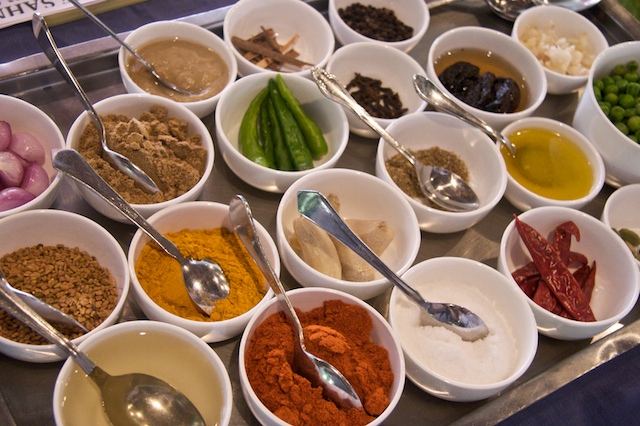 |
| YAYYY little bowls |
Oh, my bad, you probably have no idea what printmaking even
entails! To understand the concept of
the “Mis En Plate”, you need to know that first. To most, printmaking means
absolutely nothing. In reality, it is a blanket term for an array of different
methods of creating an image, and these images are considered “prints” as they
are printed on paper, typically by being put through a press. In intaglio
printmaking, which is my preferred method, images are etched onto a piece of
metal, inked, and ran through a press.
 |
| a copper etching plate with an ugly bird being drawn on it |
If the nose is an etching plate, the pores are the areas
that are etched. These deposits (on the plate, and not on the nose) hold ink,
and once pushed through a press, transfer the ink onto the paper. And viola!
Your image!
Alright, so now that I’ve grossed you out, I can finally
explain the “mis en plate”. Much like cooking, intaglio printmaking procedures
require specific preparations that attribute to the success of the print as a
whole. Within intaglio printmaking are several sub-techniques that all have
varying different ingredients. If a print is a meal, the printmaker a chef, and
a printshop a kitchen, then the mis en place for the processes is just as
important as it is to cooking. The “plate” is a direct reference to the “plate”
on which I etch, the on off which I eat.
Look forward to an introduction to my cast of characters,
aka the list of people you will be forced into hearing a lot about, as well as
excerpts from that fantastical first post!
Procrastinatingly yours,
Angela

The mis en scene of your mis en plates works marvelously.
ReplyDelete